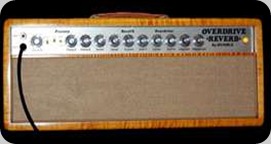
Dumble musical instrument amplifiers are custom manufactured in very limited numbers by Alexander "Howard" Dumble of Los Angeles, California. Dumble began making amplifiers in the late 1960s in Santa Cruz. There are reportedly fewer than 300 in total. Amplifier models have included the Overdrive Special (ODS), Overdrive Reverb, Steel String Singer (SSS), Dumbleland, Phoenix (a rack mounted amp), Hotel Hog and Winterland. Dumble amplifiers are considered to be one of the few precursors to the explosion of Boutique amplifier companies on the market.
Musicians who have used Dumble amplifiers include: Carlos Santana, John Mayer, Al Di Meola, Robben Ford, Larry Carlton, Eric Johnson, Stevie Ray Vaughan, Ben Harper, Lowell George, Steve Lukather, Sonny Landreth, Stephen Bruton, Jackson Browne, David Lindley and Dean Parks.
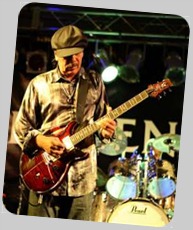
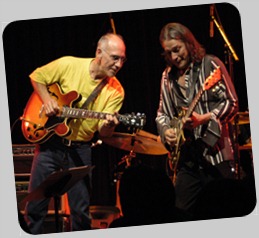
Carlos Santana Larry Carlton & Robben Ford
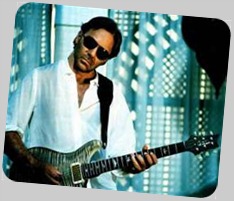
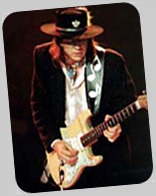
Al Di Meola Stevie Ray Vaughan

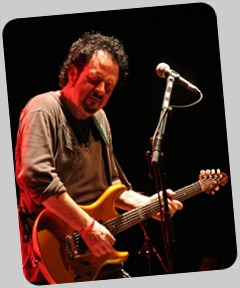
Eric Johnson Steve Lukather from ‘Toto’
Influence:
A number of companies have produced amplifiers somewhat based on the Dumble Overdrive Special. Some DIY amplifier-building hobbyists have also started to build Dumble-influenced amplifiers from unofficial schematics and inside-chassis photographs circulating on the Internet, although many have been voluntarily taken down following requests from Mr. Dumble.
Dumble's German importer in the 1980s made a clone called the Kitty Hawk Standard. Since the 1980s, Mr. Dumble has covered the preamp circuitry of his amps with a thick layer of usually opaque epoxy, protecting his schematic's exact design. Several amplifiers are known to have been "de-gooped" and their component values measured. Some of the companies that produce Dumble type designs have evolved the design, adding features and creating their own sound that in some cases are a departure from the "classic" Dumble tone, functionality, layout and styling. Some companies prefer to faithfully reproduce the Dumble tones and aesthetics as closely as possible, making them available to a much wider range of players than could otherwise afford originals.
Amp makers who openly promote their "Dumble Clones" include:
-
Bludo-Tone Amp Works – Bludo-Drive model based on the Over-Drive Special, and the Hi Plains Drifter based on the Steel String Singer
-
Bruno Amps - Super 100 model based on the Over-Drive Special (models for both 6L6 and EL34 power tubes)
-
Carol-Ann - OD-2 model based roughly on the Over-Drive Special with a more British tone
-
Ceriatone – Over-Tone Special models based on the Over-Drive Special with models for different voicings, tone stacks, and power tubes
-
Fuchs Audio Technology - Overdrive Supreme models based on the Over-Drive Special
-
Glaswerks - Super Over-Drive II model based on the Over-Drive Special with voicings for amps produced in different eras
-
K&M Analog Designs - A large number of amps that borrow the basic Dumble topography.
-
Sebago Sound - Double Trouble line of amps based on the Over-Drive Special, Steel String Singer and ODSR
-
Welagen Musical Sound - Overdrive Special based models, Overdrive Reverb based models, Steel String Singer based models, Angel's Breath model based on both ODS and SSS circuits.
Amps made by Mr. Dumble reportedly sell new for more than $20,000. Given the small output from Dumble, used Dumble amps often sell for more than $30,000.
Circuitry:
The circuitry varies somewhat between individual amplifiers, as each one was built and voiced for a specific player. Amplifiers built around the same time tend to share some of the same circuitry and component values. However, several amplifiers were later sent back to Dumble to have their circuitry updated.
Part of the characteristic sound of Dumble amplifiers is alleged to come from Dumble's choice of parts:
-
the type of capacitors used in the tone stack and in the overdrive stages
-
the type of plate resistors
-
the output transformer
-
the lead dress, and the use of shielded wire.
Dumble amplifiers are built on eyelet boards . The chassis is made of aluminum.
All Dumble amplifiers operate using vacuum tubes. Overdrive Specials use 12AX7 tubes in the preamp and 6L6 tubes in the power amp in older models. A few Overdrive Specials, notably #167 and #183, were equipped with EL34 tubes in the power amplifier section. EL34 tubes are associated with a more "British" or "Marshall" sound while 6L6 tubes are associated with a more "American" or "Fender" tone.
A separate Dumblelator; buffered effects loop (a cathode-follower output with a triode gain stage for recovery), is recommended for using effects processors with a Dumble amplifier.
Models:
Overdrive Special

50W ODS Combo
There are two inputs: a "normal" input and FET input where the signal from the guitar goes to a J-FET line level booster pre-amplifier before entering the first tube stage (originally intended for use with acoustic guitars and other instruments with low output levels).
The first tube is followed by a passive tone stack with adjustments for treble, middle, and bass. Typical switching options available in the different models include:
-
Bright (bypasses the volume potentiometer with a capacitor to boost the high frequencies)
-
Deep (changes the voicing of the tone stack for a warmer tone by increasing the low mid frequencies)
-
Mid (increases the value of the treble capacitor to boost the mid-range frequencies)
-
Boost (disconnects the treble potentiometer from the bass potentiometer for a preamplifier level boost)
-
Rock/Jazz (switches between a Fender-esque voicing and a more "hi-fi-type" of voicing).
The tone stack is followed by another clean preamplifier stage. The resulting signal is either fed straight into the power amplifier ( clean channel), or into the (two-stage) overdrive section. The power amplifier uses a standard long-tail pair phase inverter with negative feedback. It will break up , but only at very high volume levels, or when the preamplifier "boost" switch is engaged.
In some newer models (1990s to present), the overdrive stages are followed by a passive tone stack (treble , middle and bass), which is adjustable using trimmer potentiometers inside the amplifier. This is known as the "Hot Rubber Monkey" (HRM) modification (these amplifiers are voiced for the overdrive channel to be used with the preamplifier boost engaged). Most players use three tones: clean, clean with boost on, and overdrive with boost on.
The "Skyliner" EQ refers to a newer (mid-1980s to present) way of voicing the tone stack. It is said to provide a better clean tone than the earlier voicing of the tone stack. Some lower serial number amps have been retrofitted with this EQ.
The so called "Robben Ford Mod" (terminology used by DIY-hobbyists) refers to using a power resistor instead of a choke in the power supply in order to induce more "sag" in the amplifier.
Borderline Special:
This amp was built for Ry Cooder and is a 50 watt overdrive special with added tremolo.
Overdrive Reverb:
Much of the circuitry in the Overdrive Reverb is similar to that of the Overdrive Special. The reverb circuit in one known specimen uses three tubes ( two tube configurations are commonly used). The first tube is used to amplify the input signal, which is then sent to the second tube that drives the reverb tank through a transformer in a configuration similar to that used in Fender amplifiers. The third tube mixes the clean and the reverberated signals . Both reverb "send" (the signal level sent to the reverb tank) and reverb "return" (how much of the signal returned from the reverb tank is mixed with the dry signal) are individually controllable.
Steel String Singer
This model was made in very limited numbers. Power output was usually 100W, although Stevie Ray Vaughan's famous "King Tone Consoul" SSS was rated at 150W. It was a "clean", loud amp with no overdrive section. The standard model used 4 x 7025 high-mu twin triodes; 1 x 5751 high-mu twin triode and 4 x 6L6 power tubes. The amp used a standard Dumble tone stack with an optional two tone switch tone filter.
Dumbleland:
300 W DUMBLELAND 300SL (six 6550A beam power pentode output tubes).Power tubes were drive by a 12 BH7 (one in special , two in 300 SL) as a direct coupled cathode follower. Instrument inputs include FET input as found in ODS. Front panel controls include two rotary switch controls labeled as tone expander (special) or tone-filter(300 SL) and controls for reverb in 300 SL model (send and return). Tone controls/switches are standard Dumble style. One amplifier intended/ordered as a "blues" amplifier ( derivative of the standard model) uses two EF 86 pentodes (the first configured as a triode), rather than the single 7025/12 AX 7, in the pre-amplifier section.
150W “Dumble” Overdrive Special

Back Panel of 150W Dumble ODS
In 1987, Dumble made two otherwise unique amplifiers for Todd Sharp at 150W utilizing signature components from several of his other famous models. The power supply is similar to that of the 150W Dumbleland amplifier, but using 7025 tubes as in the Steel String singer. It is switchable from 150W to 75W. Preamp tubes are: a)6 x 7025, b)1 x 7247, c)1 x 5751 while the power amp uses 4 x 6550A tubes. The amplifier also uses the SSS 3-spring reverb. Dumble also included a tremolo. The back panel includes controls for adjusting the bias and dynamic balance which are believed to be unique to this model; speaker outputs are switchable at 2,4 or 8 ohms. Inputs include normal and FET as with most Dumble amplifiers. The footswitch permits turning on and off the overdrive, the pre-amp boost, the tremolo and reverb. The intention according to Dumble was to combine the best features of the Overdrive Reverb and the Steel String Singer with the distinctive overdrive circuit of the Overdrive Special. One of Sharp's amplifiers was stolen and has not been recovered. The other, pictured here, is in Los Angeles, reportedly in a recording studio. The power circuit has been described in Aspen Pittman's "The Tube Amp Book."
Winterland
The Winterland was designed primarily as a bass amplifier. It is rated at 450W at 8 ohms. It was named after the San Francisco concert hall.
Dumbleator

Dumbleator

Dumbleator II
Dumble also occasionally makes a tube-buffered external effects loop called a Dumbleator. A few Dumble amps have a Dumbleator circuit built into them, but most do not. Many users insist that a Dumbleator is required to obtain the optimal sound when using effects boxes and pedals. The Dumbleator has separate "Send" and "Receive" circuit for the effects; a gain control, "Bright Switch" and a return level. Dumbleators are even rarer than Dumble amplifiers. The original Dumbleator was mono-in with mono-out, and follow-up Dumbleator II allowed for stereo output instead.
External links
-
Amp Treasures - a collection of photographs of Dumble amplifiers, some with descriptions -
Vintone Circuits - Detailed photos of Dumble Overdrive Special(not original) Cabinetry and Faceplate -
The Amp Garage - Discussion forums for people interested in Dumble and Trainwreck amplifiers -
Rob Livesey's Page - A collection of photographs, datasheets, and other information about Dumble amplifiers -
[1] - a collection of Dumble history and stories, various Interviews with Howard Alexander Dumble and others and a wide selection of Dumble amplifier photographs.
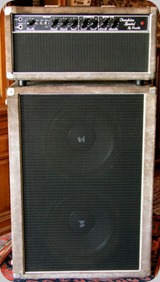
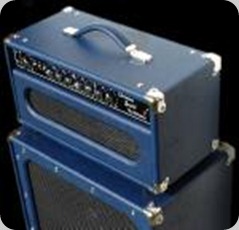
Dumble Amplifiers
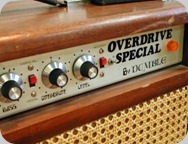
I’ve owned a Marshall Double-Stack, a multitude of different Fender Models including a Custom-Built Fender Princeton model from Los Angeles, CA, as well as a Custom-Built Ampeg. I’ve also had the opportunity to use a Mesa Boogie Mark III Combo several years ago, and of all the amps I’ve played with, nothing has held a candle to the Mesa Boogie Mark III Combo. I can only imagine what the Dumble Amplifier sounds like considering they cost between $20,000.00 and $30,000.00 and you can purchase a Mesa Boogie for under $4,000.00, and that’s if you special order it in a custom wood such as ‘Babinga’, ‘Private Reserve Quilt Maple’ or ‘Tasmanian Blackwood’ w/Amber Stain Wicker Cane Grille.
In 2012, In finally plan to purchase my first Mesa Boogie amplifier. I’m looking to purchase a Mesa Boogie Mark V Combo Model in a Custom Wood and Finish w/ the Wicker Cane Grille. My preference would be the Tasmanian Blackwood w/ Amber Stain or the Babinga, as shown below.

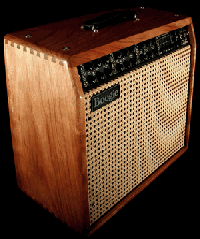

Mesa Boogie Mark V Combo
It’s not enough to have a great guitar, a good quality amp is equally important. And just like guitars, the price points for amps are all over the place! While I can reasonably expect to be able to set aside enough money to purchase a Mesa Boogie later this year, there is no way that I could justify spending the purchase price of a new car for a piece of musical equipment. I applaud the musician who can, however; maybe one day I’ll earn enough as a musician myself to warrant it. In the meantime, it doesn’t hurt to look!
Do you have your eye on a piece of equipment to add to your studio this year? How about a beyond-your-reach-but-in-your-sights-item? Please share; I would enjoy comparing notes!
Until next time ~
Musician By night . . .