Stephen Ray "Stevie Ray" Vaughan (October 3, 1954 – August 27, 1990) was an American electric blues guitarist and singer. He was the younger brother of Jimmie Vaughan and frontman for Double Trouble, a band that also included bassist Tommy Shannon and drummer Chris Layton. Born in Dallas, Vaughan moved to Austin at the age of 17 to continue his music career. Producer John H. Hammond arranged a deal with Epic Records in 1983.
Alcohol and drug abuse severely affected his health before he became sober in late 1986. After three years without a new album, he returned to the studio, releasing In Step. The album produced the single "Crossfire" in July 1989, which became a number one hit on the Hot Mainstream Rock Tracks chart. On August 26, 1990, Vaughan performed at Alpine Valley Music Theatre as part of his In Step Tour in a triple bill along with Eric Clapton and Robert Cray before an audience of approximately 25,000 people. While leaving the concert that evening, his helicopter crashed into a nearby ski slope. He was pronounced dead hours later.

Vaughan was a very important figure in Texas blues, a loud, swing-driven fusion of blues and rock. He became the leading musician of the blues rock sound, with multiple network television appearances and charting albums. His debut Texas Flood, released in June 1983, became a double-platinum record. Vaughan encompassed multiple styles, including jazz and ballads. Nominated for 12 Grammys, he won six. He won five W.C. Handy Awards and was posthumously inducted into the Blues Hall of Fame in 2000. He is widely considered one of the most respected and influential guitarists of all time
Early years / Childhood in Dallas:
 Stephen Ray Vaughan was born on October 3, 1954, in Dallas, Texas to Martha Jean and Jimmie Lee "Big Jim" Vaughan. James Lawrence "Jimmie" Vaughan, his brother, was three years older. Vaughan's ancestors performed in bands with Glenn Miller and Tommy Dorsey, as well as Western swing groups in the Dallas area. Big Jim was an asbestos worker, switching from one construction site to the next and leaving the family filled with uncertainty. After settling in the Dallas suburb of Oak Cliff, Vaughan attended Lenore Kirk Hall Elementary.
After observing Jimmie, Vaughan played his brother's guitars before receiving one of his own. Among the first songs he learned were "Wine, Wine, Wine" and "Thunderbird" by a garage rock band from Dallas known as The Nightcaps. He played along to the records that his brother brought home, including the likes of Muddy Waters, B.B. King, The Beatles and Jimi Hendrix. He purchased his first Lonnie Mack record, The Wham of that Memphis Man, in 1963. Vaughan later recalled one instance where he borrowed a friend's Shure Vocal Master PA system, placed microphones in front of the speakers and turned the volume up.
At age twelve, Vaughan applied for an after-school job as a dishwasher in a local restaurant. It did not last long, when he fell into a barrel of grease after cleaning out a garbage bin. Vaughan recalls:
“One of my jobs was to clean out this trash bin next to a grease vat. Well, I was standing on the cover of that thing and it caved in. I fell in it and someone almost poured hot grease all over me by accident—I could have been killed.
Well, I told the woman I was working for about it and she just started telling me about how much it was gonna cost me to pay for that lid. She wouldn't even let me use the office phone. I walked through the restaurant to the pay phone, twelve years old, covered with grease, called my mom to come get me and told her the whole story so everybody in the restaurant could hear it. People started leaving—it was great!”
Teenage life in Austin

During his years at Justin F. Kimball High School, Vaughan began to stand out from his classmates, dressing more like a musician and lengthening his hair. He recorded with the high school band "Cast of Thousands" for a compilation album named A New Hi. He also joined groups such as Epileptic Marshmallow, Liberation and Storm. Vaughan soon formed his own band, Blackbird.
In 1972, after failing music theory, Vaughan dropped out of high school and moved to Austin with Blackbird.After arriving, he rented a home with five of his friends for $30 a month. He was often broke, sleeping on couches and pool tables in different nightclubs. He collected Coke bottles and saw many of his favorite performers. Vaughan soon joined a hard rock band called Krackerjack. At the time Krackerjack featured pianist Mike Kindred, drummer Uncle John Turner and bassist Tommy Shannon. Shannon, who played with Johnny Winter at Woodstock in 1969, first heard Vaughan play at a Dallas club called The Fog when he was fourteen. Vaughan soon quit when the group considered wearing makeup on stage.
In March 1973, he was asked to be a part of Marc Benno's band called The Nightcrawlers. The lineup featured musician Doyle Bramhall, who taught Vaughan how to sing. Bramhall and Vaughan would later collaborate as songwriters. They flew to Los Angeles to record an album for A&M Records. A&M catered to the band and put them up in a good hotel, though it refused to release the album. Leaving Benno in Los Angeles, the Nightcrawlers continued to perform in Austin. They attracted the attention of Bill Ham, who was the manager of Texas blues rock group ZZ Top. Ham arranged the Nightcrawlers' bookings throughout the South. The band soon started showing up to gigs that either never existed or were canceled without notice. Ham grew frustrated because of this and demanded that the band reimburse him for their expenses.
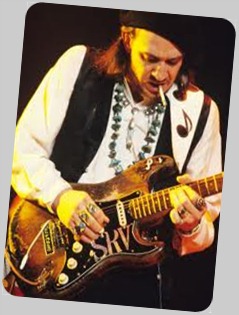
Shortly after leaving the Nightcrawlers, Vaughan went to a music store in South Austin called Ray Hennig's Heart of Texas Music. Owner Ray Hennig recalls when Vaughan came to his store to purchase the battered Fender Stratocaster that had previously belonged to San Antonio-born musician and Austin resident Christopher Cross. This "axe" would remain his favorite guitar thereafter:
“When he came in, like every other day, we had a long row of guitars and he wouldn’t take them off the hook. He’d simply walk down and feel them and look at them and move on to the next one. He stood there and looked at that old thing and I thought, oh no. Then he reached down and felt it, just like he did always. And then he took it off the hook, hitting some licks on it. He said, ‘Ray, where’d you get this?’ I said, ‘Stevie, you have got to have picked the biggest junker on the wall.”
—Ray Hennig,
In December 1974, Vaughan joined guitarist Denny Freeman in the popular Austin group Paul Ray & the Cobras. With this band, he started developing his vocals, singing with a scratchy, coarse style. While playing at an Austin club called La Cucaracha with the Cobras, Vaughan met his future wife, Lenora "Lenny" Bailey.
Clifford Antone, an aspiring bassist with a passion for blues, owned an import clothing store and desired a facility in which he could have jam sessions with friends. He converted a back room of his store into a club. Both Vaughan and his brother often visited and jammed with Antone for hours. Antone opened the eponymous Antone's in July 1975. Albert King gigged at the club and Vaughan was determined to jam with him. After pestering from Antone, King finally agreed to let Vaughan on stage. King was impressed with Vaughan's playing and let him stay. He was soon convinced that he shared the stage with one of the greatest white blues musicians he had ever encountered.
The Cobras recorded a single, though it never attracted attention from a major label. The band decided to change their style, making it more "mainstream". Discouraged, Vaughan left and formed his own group, with vocalist Lou Ann Barton, bassist W. C. Clark, drummer Freddie Pharoah and keyboardist Mike Kindred. Vaughan named the band Triple Threat Revue.
Double Trouble
Within a year, Clark, Pharoah and Kindred left Triple Threat, which left Vaughan and Barton to form another group called Double Trouble, naming it after an Otis Rush song. The lineup featured bassist Jackie Newhouse, saxophonist Johnny Reno and drummer Chris Layton.
More than four years after they first met, Vaughan ran into Lenny Bailey at a Mexican restaurant in downtown Austin and asked if he could move in with her. On the same night, he wrote the song "Love Struck Baby," which was later featured on his debut album. They were married on December 23, 1979. The ceremony took place in the offices of the Rome Inn club in Austin, shortly before performing with Double Trouble. In front of family and friends, their rings were supposedly fashioned from pieces of metal found on the floor.
Departure of Lou Ann Barton
Cleve Hattersley, ex-frontman for a local Austin band Greezy Wheels, booked Double Trouble at the Lone Star Cafe in New York City. According to Hattersley, Barton "was real drunk" after the show and "threw beer glasses at the waitresses". The next day, Barton left Double Trouble to sing for Roomful of Blues. With Barton's departure, Vaughan became the frontman. The band also hired Chesley Millikin, who had worked with The Rolling Stones, Grateful Dead and Jackson Browne, as their manager.
On April 1, 1980, the band recorded a show at the Steamboat 1874 club in Austin. The recordings were released posthumously in 1992 as In the Beginning. At a pawn shop in Austin, Vaughan spotted a used Fender Stratocaster that cost $350, though he could not afford the guitar. According to his wife, she found seven people with $50 and purchased the guitar. Presented to him for his birthday at Steamboat Springs in Austin, the guitar was affectionately named "Lenny". The next year, after seeing the band at Rockefeller's in Houston, Tommy Shannon replaced Jackie Newhouse. Vaughan also started using his full name, Stevie "Ray" Vaughan. Millikin proposed the idea of merging "Stevie Ray Vaughan" with "Double Trouble," and all band members agreed.
In July 1981, the band played a festival at Manor Downs in Manor, Texas. A film from the performance was given to Rolling Stones frontman Mick Jagger by manager Chesley Millikin. Millikin received a call from drummer Charlie Watts, arranging a private party in New York City at a club known as Danceteria. The band was booked to only play 35 minutes, though they ended up performing for over two hours. With photos and an article about the occasion in Rolling Stone, rumors spread that Vaughan and Double Trouble were going to sign with Rolling Stones Records. Jagger declined, however, saying that "the blues just doesn't sell."
Commercial breakout and success
Montreux Jazz Festival and David Bowie


In early 1982, Vaughan and Double Trouble played a record release party for Lou Ann Barton at the Continental Club in Austin. Impressed by the band's performance, music producer Jerry Wexler recommended that they play the Montreux Jazz Festival in Switzerland, performing on July 17, 1982. They were the first unsigned act to perform at the festival's Montreux Casino. The band borrowed $15,000 from Millikin to pay for travel expenses. Backstage, the band ran into Larry Graham, bassist for Sly and the Family Stone. He asked them if they could play together during the encore of their performance, though this did not happen. The lineup featured primarily acoustic acts, while Vaughan and Double Trouble went on stage highly amplified and several audience members started to boo. After the show, Millikin booked the band in the bar at the Montreux Casino, jamming with musicians like Bob Glaub and Jackson Browne. Browne offered them three free days at his Los Angeles studio. Unable to afford the expense, the band booked a small tour in venues across Texas. During Thanksgiving weekend, they traveled to Jackson Browne's studio and recorded a demo in two days.
Vaughan received a call from pop star David Bowie, who had seen him at Montreux and wanted Vaughan to play on his next album Let's Dance. Bowie also asked Vaughan to be a part of his band on the Serious Moonlight Tour, commencing in Belgium. In March 1983, rehearsals for the tour took place in the Studios at Las Colinas. Bowie grew irritated by Vaughan's wife Lenny and banned her from rehearsals. Bowie invited Vaughan and Double Trouble to be the tour's opening act. Manager Chesley Millikin took advantage of the European appearances by booking the band on a German television program called Musikladen, though Bowie ordered Millikin to cease managing Vaughan while on tour. In turn, Millikin demanded an increase in Vaughan's compensation, which was then reportedly $300–$400 per show. The contract was allegedly reviewed by show business attorney Lee Eastman, who supposedly denied all knowledge of the agreement. Vaughan eventually opted out of the tour.
Texas Flood
Millikin sent copies of the band's demo to various New York industry figures. The demo caught the attention of music producer Hank O'Neal. O'Neal worked for John H. Hammond, who had discovered Aretha Franklin, Bob Dylan and Bruce Springsteen among many others. Hammond liked the demo enough to take it to Greg Geller, head of A&R at Epic Records, which led to a record deal. Millikin demanded two music videos and six months of promotion. In turn, Epic gave the band a $65,000 advance to finance the recordings. Hammond was hired as executive producer. While remixing at Media Sound Studios in New York City, Vaughan and Double Trouble played a showcase for CBS Records executives at the Bottom Line in Manhattan on May 9, 1983. Even though he was nervous, Vaughan fascinated an audience filled with musicians like Jagger, Johnny Winter and Billy Gibbons of ZZ Top.
Epic released Texas Flood on June 13, named after a song on the album by blues musician Larry Davis. The album showcased Vaughan's thick-toned shuffles, with rhythmic guitar riffs and intense solos. It yielded ten songs, most of which had been a part of Vaughan's stage repertoire for years. There were six originals, alongside covers of Howlin' Wolf, The Isley Brothers and Buddy Guy. Texas Flood peaked at 38 on the Billboard 200 chart and sold more than 500,000 copies the first week.The band went on tour, playing a sold-out show at The Palace in Hollywood and opening for The Moody Blues. In December, Vaughan appeared with Albert King for a Canadian television show called In Session. Recorded at CHCH studios in Hamilton, Ontario, In Session displayed the guitarists' mutual respect and admiration. A CD from the program was released in 1999. A two-disc CD/DVD version of this performance was subsequently re-released in late 2010.
On December 13, Vaughan and Double Trouble appeared on Austin City Limits. His performance, in the studios of KLRU, was later released as Live from Austin, Texas. Texas Flood was certified 2x Platinum by the RIAA. Vaughan received Grammy nominations for Best Rock Instrumental Performance and Best Traditional Blues Performance. In addition, he won polls for Guitar Player magazine including Best Blues Guitarist, Best New Talent and Best Blues Album.
Couldn't Stand the Weather and Carnegie Hall performance
In January 1984, Vaughan and Double Trouble started recording a new album at the Power Station, staying at the Mayflower Hotel in New York City. Within an hour of setting up their equipment, recording engineer Richard Mullen asked the band to "play something for peak-reading". With tape rolling, they played a blues cover named "Tin Pan Alley". When the song was finished, Hammond said into the talkback microphone, "That's the best you'll ever get that song. That sounded wonderful". After more takes drummer Chris Layton recalls that it "never sounded better than that". After completing the recordings, the band performed at Volunteer Jam X, a concert first organized by the Charlie Daniels Band in 1974. Vaughan appeared with musician George Thorogood at the 26th Grammy Awards to present Chuck Berry with the Grammy Lifetime Achievement Award.
Released on May 15, 1984, Couldn't Stand the Weather charted at 31. A cover of Jimi Hendrix's "Voodoo Child (Slight Return)" was included on the album and became a concert favorite. Music videos were made for "Couldn't Stand the Weather" and "Cold Shot". The "Couldn't Stand the Weather" music video used industrial fans with large amounts of water, combining live action with stock footage of a violent hurricane. The "Cold Shot" music video featured actress Margaret Wiley, who was part of a comedy troupe at Esther's Follies theatre in Austin. Both videos received moderate airplay on MTV. In August, Vaughan and Double Trouble opened for Huey Lewis & the News at the USF Sun Dome, with Lewis saying that Vaughan was "absolutely the best guitarist I've ever heard". On August 25, the band played at the Loreley Freilichtbühne in Sankt Goarshausen, Germany for the television series Rockpalast.Two nights later, they performed at Alabamahalle in Munich, broadcast for the show Live aus dem Alabama.
On October 4, 1984, Vaughan and Double Trouble performed a sold-out concert at Carnegie Hall in New York City, a benefit for the T. J. Martell Foundation. In celebration of Vaughan's birthday the night before, the concert featured an expanded group of musicians, including brother Jimmie on guitar, drummer George Rains and Austin vocalist Angela Strehli. Keyboardist Booker T. Jones and the Tower of Power horn section were originally included in the lineup, but were replaced by Dr. John and the Roomful of Blues horn section. Only the second set included the special guests. The musicians wore custom-tailored velvet charro suits made by Nelda's Tailors in Austin. A special stage set was designed, complete with drum and horn risers. It was built out of wood and painted with lapis blue enamel with gold-colored metallic striping.
The ensemble warmed up at the Caravan of Dreams in Fort Worth, rehearsed the show at Third Coast Studios in Austin, performed a dress rehearsal at a warehouse in New York, and did a soundcheck at Carnegie Hall on the afternoon of the performance. The concert was to be filmed, but budget and time constraints intervened. The show started at 8 p.m. and Ken Dashow, DJ for WNEW-FM, welcomed the audience. He introduced John Hammond, who called Vaughan "one of the great guitar players of all time". In the audience were Vaughan's wife Lenny and many friends. Martha and Big Jim flew in from Texas. Big Jim was in a wheelchair, ill from years of working with asbestos.
Tour in Australia and Lonnie Mack collaboration
Vaughan toured Australia and New Zealand, including two sold-out shows at the Sydney Opera House. In New Zealand, he received word that he had won two W. C. Handy Awards for Blues Instrumentalist of the Year and Entertainer of the Year, the first white performer to receive either award. He flew to Memphis for the ceremony at the Orpheum Theatre. At its conclusion, he participated in an all-star jam to "Every Day I Have the Blues," made popular by B.B. King in 1955.
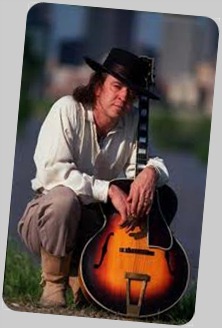

In late 1984, Vaughan was asked to co-produce an album with musician Lonnie Mack by Bruce Iglauer, founder of Alligator Records. Vaughan did not get along well with Iglauer, who found him to be "distant" and "inconsistent" during the sessions. In an interview, Iglauer said that he "wasn't used to seeing musicians being so flagrant in their drug and alcohol use". Strike Like Lightning, Mack's first studio album in eight years, was released in 1985. Even though all three were not happy with the results, Vaughan's friendship with Mack from the late 1970s endured. With lengthy absences on the road, Vaughan's relationship with Lenny became tense, prompting them to take a vacation in Saint Croix on the Virgin Islands. Upon their return, they moved to Volente, Texas, located on Lake Travis and about 30 miles (48 km) outside of Austin.
National anthem and Soul to Soul
In January 1985, Vaughan and Double Trouble went on a mini tour of Japan. The January 24 show, at Shiba Yubin Chokin Hall in Tokyo, was filmed and released on CD and DVD as Live in Tokyo in 2006 and 2007, respectively. On February 3, 1985, Vaughan's longtime friend Charley Wirz, owner of Charley's Guitar Shop in Dallas, died from a heart attack. He wrote a song dedicated to Wirz titled "Life Without You". In March, the band started recording a new album at the Dallas Sound Lab. Vaughan and Shannon's problems with alcohol and cocaine escalated. They often played ping-pong and waited for their cocaine to arrive before recording.
On April 10, Vaughan was asked to play "The Star Spangled Banner" at the Houston Astrodome for the Astros vs. Dodgers game. He flew to Houston with Lenny, to whom he confessed that he was not certain of the melody. She hummed it to him. Baseball legend Mickey Mantle threw the first pitch and signed Vaughan's "Lenny" guitar.Vaughan played the national anthem with a Mighty Mite brass slide. His performance was followed by negative reviews, with one reporter commenting, "I was sure he'd be dead by the time he hit 30".
Discouraged by the lack of progress in the studio recordings, Vaughan wanted to expand the band by adding a keyboard player. Drummer Chris Layton invited session keyboardist Reese Wynans, who had performed with Delbert McClinton and Jerry Jeff Walker and Vaughan approved. Both Sublett and Wynans were included in "Look at Little Sister," a Hank Ballard song. Wynans became the band's full-time keyboardist. After two months of recording, the band went on tour and performed at many festivals including the Chicago Blues Festival. They also performed at the Montreux Jazz Festival for the second time. Soul to Soul was released on September 30, 1985, which peaked at 34 on the Billboard 200. While Couldn't Stand the Weather sold over a million copies, Soul to Soul sold half as many, leading Rolling Stone to suggest that they had "run out of gas".
In February 1986, Vaughan and Double Trouble appeared on Saturday Night Live with Jimmie Vaughan, performing "Say What!" and "Change It". In March, the group again toured Australia and New Zealand with Jimmie Vaughan's band The Fabulous Thunderbirds. While in Auckland, Vaughan met 17-year-old Janna Lapidus, who had a successful modeling career during high school. When Vaughan returned home to Austin, he found the house padlocked, electricity shut off and Lenny nowhere to be found. According to authors Joe Nick Patoski and Bill Crawford, Lenny spent Vaughan's tour earnings on drugs while running around with other men. Manager Chesley Millikin also announced that as of June 1, he would no longer represent the band, claiming it owed him $100,000. They hired Alex Hodges, from International Creative Management, to be their full-time manager. Although Vaughan let Hodges know that the group needed more time off from the road, Hodges disagreed, saying that the only way to get out of the debt was to tour as much as possible.
Live Alive and father's death
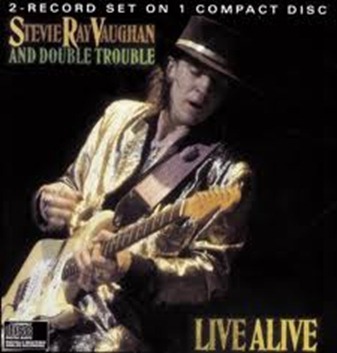
Vaughan and Double Trouble performed shows at the Austin Opera House and Dallas Starfest to make recordings for their first live album, though they were filled with technical flaws. The recordings were later released on the album Live Alive in November. During the show in Dallas, Vaughan spotted Lenny standing backstage shouting at him. Although he ignored her, she started to walk on stage and was dragged off by security guards. She told the guards about a party at the Stoneleigh Hotel in Vaughan's honor hosted by Isaac Tigrett, founder of the Hard Rock Cafe. According to Lenny, Tigrett wanted to present Vaughan with one of Jimi Hendrix's Gibson Flying V guitars. Following the show, Vaughan learned from family members that his father's condition was worsening. He left for the hotel with cousin Connie. After playing Hendrix's guitar for a few minutes, Vaughan started to leave with it, but was stopped by Tigrett, who asked him to autograph it instead. Vaughan left the hotel in a rage.
On July 27, Vaughan and Double Trouble played at the Greek Theatre in Los Angeles, with special guests Hank Ballard and Mitch Mitchell. The band also performed at San Diego State University, Santa Cruz Civic Auditorium and Oregon State Penitentiary. On August 26, they participated in a taping of a television pilot for a series called American Caravan, hosted by musician Lonnie Mack at the Orpheum Theatre in Memphis. Filmed for broadcast on PBS, American Caravan was Mack's attempt to host a program similar to Austin City Limits, though the series never went into syndication. Before the show began, Vaughan received a phone call from his mother, Martha, who told him that his father was in the hospital and losing his battle with asbestosis. The next day, he visited his father in Medical City Hospital. Vaughan sat at his father's bedside with his mother and Jimmie. Assured by doctors that her husband's condition would not improve, Martha gave her approval to turn off life support.
After attending his father's funeral, Vaughan was scheduled to play at the Miller Musicfest in Canada in Jarry Park. Upon arrival, Vaughan discovered that $20,000 in musical equipment had been stolen. This caused the band to take the stage at 11 p.m., a three hour delay from their original agreement. According to an investigation, a man claiming to be the band's manager made a telephone call to US Airways at Albany International Airport. He said that when Vaughan's equipment arrived at the airport, it would be transported to his performance in Montreal. Airport employees packed nine road cases into a rented U-Haul truck, where the man pretending to be the manager disappeared with the equipment. Among the stolen equipment were custom-made effects for Stevie, amplifiers, Fender Stratocasters and a Vox wah-wah pedal that belonged to Jimi Hendrix.
European Tour

After weeks spent mixing the Live Alive album in Los Angeles, Vaughan and Double Trouble toured Europe, where they were scheduled to play 28 shows at venues like the Paris Olympia and Metropol. On September 26, the band shared the bill with ZZ Top at the Circus Krone Building in Munich. ZZ Top's manager, Bill Ham, was aware of Vaughan's addiction to drugs and pulled him aside after the show, warning him that he was "killing himself". He also said that "whoever was responsible for Stevie's life and career had not intervened to rescue this talented young man from what appeared to be a downward spiral".
Following a show in Ludwigshafen, Vaughan and Chris Layton tried and failed to find an open liquor store. While walking, Vaughan repeatedly stopped to vomit blood, a result of years of dissolving cocaine into Crown Royal whisky. Returning to the hotel, he went to bed and vomited more blood. Vaughan began sweating and vomiting in an unconscious state. When he awoke he told Layton "I need help". Layton called an ambulance and the paramedics injected Vaughan with saline solution. Lying on the hospital bed, he was shaking, sweating and pale. Paramedics determined that he had suffered near fatal dehydration. After performing in Zurich the next night, Vaughan was admitted to a hospital in London. He went under the care of Dr. Victor Bloom, who helped Eric Clapton and Pete Townshend kick their heroin addictions. Dr. Bloom told Vaughan that the massive amounts of cocaine and whisky consumed had produced a gastric ulcer in his stomach. He also said that the cocaine was crystallizing and eating into his intestines. He explained that if the habit continued, Vaughan would die within a month. Vaughan called his mother and girlfriend Janna Lapidus, the model he had met in New Zealand months before:
“As soon as I got into the hospital, I called my mother up and said, 'I don't know if you knew this was coming or not, but I am in the hospital and this is what happened.' 'Where are you?' she said. I told her and she was there the next day. I called my girlfriend, who was gonna try to meet up on my birthday. She hadn't seen me in six months because I had been on a tear, didn't know how to act or what to be. She was there in two days.”
—Stevie Ray Vaughan,
Visitors included musicians Browne and Clapton. Dr. Bloom suggested that Vaughan check in to Peachford Hospital in Atlanta. The band agreed to one last London concert before returning to the United States, performing at the Hammersmith Palais. Vaughan resumed drinking although his mother and Lapidus were in the audience for moral support. Wearing a war bonnet, Vaughan walked off stage with the band at the show's conclusion when the lights were shut off. He attempted to walk backstage across a plank and tripped, with cuts and scrapes on his legs. The other 12 tour dates were canceled.
Comeback
Back on tour and cameo appearances
After two months in treatment, Vaughan and Shannon went on the road, playing their first sober show at the Towson Center in Maryland. They often attended Alcoholics Anonymous meetings. The tour took the band to Radio City Music Hall and Fox Theatre in Atlanta on New Year's Eve with Lonnie Mack. In January 1987, they played at the Fair Park Coliseum, which was Vaughan's first sober performance in his hometown. Vaughan and his brother hosted a show with The Fabulous Thunderbirds in a Mardi Gras television special on MTV. In April, Vaughan made a guest appearance on a Cinemax television special called B.B. King & Friends: A Night of Red Hot Blues. Filmed at the Ebony Showcase Theatre in Los Angeles as a tribute to King, the special featured Clapton, Phil Collins, Dr. John and Albert King, as well as vocalists Etta James, Chaka Khan, Gladys Knight and Billy Ocean. Vocalist and harmonica player Paul Butterfield was also included, one month before his death from an overdose.
It was during the summer of 1987 that Vaughan sat down with a writer for Nine-O-One Network Magazine while in Memphis for a concert at Mud Island and spoke honestly about his struggle with addiction. Said Vaughan: "I spend all of my spare time now working on myself and trying to keep from being so troubled inside. It's helping."
Vaughan made several cameo appearances in films, including the 1987 movie Back to the Beach an appearance with surf rock guitarist Dick Dale. They both played "Pipeline," a major hit for The Chantays in 1963. He was featured in the music video for "First We Take Manhattan" sung by Jennifer Warnes. In June, Vaughan and Double Trouble appeared on the Canadian television show It's Only Rock and Roll featuring Jeff Healey, who Vaughan had met in 1985. They played "Look at Little Sister". The band was part of a sold-out Volunteer Jam XIII at the Starwood Amphitheatre in Nashville, which was broadcast as part of the Jerry Lewis MDA Telethon. It was also where Lynyrd Skynyrd performed together for the first time in the ten years since Ronnie Van Zandt's death.
Stevie Wonder collaboration and divorce
In 1988, Vaughan and Double Trouble performed at the New Orleans Jazz & Heritage Festival, inviting B.B. King, Albert Collins and pianist Katie Webster on stage. Vaughan was a part of a Stevie Wonder MTV special, Characters. Wonder, who had heard Vaughan's version of "Superstition" from Live Alive, had included Vaughan on the Characters album the previous year. He played guitar on a commercial for the Europa oil company with New Zealand blues guitarist Midge Marsden, who became friends with Vaughan after meeting him in Dallas. They toured together and Marsden lived in Vaughan's home at various times.
When CBS Records (Epic's parent) was sold to Sony Music Entertainment in 1987, Hodges worked out a deal with Sony. Vaughan and Lenny could not agree on a divorce settlement; the court required him to pay her a lump sum of $50,000, with an additional $130,000 in attorney fees. She also received 25 percent of future royalties on his four albums. They toured Europe during the summer and played at many festivals.
In Step and tour with Jeff Beck
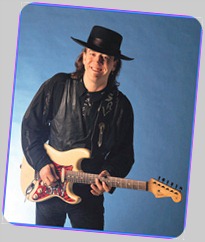

After completing a series of North American tour dates, Sony renewed the band's contract and gave them three months to record a new album. Given Hammond's death in 1987, they chose producer Jim Gaines, who had worked as an engineer with the Steve Miller Band, Huey Lewis and the News, Bruce Hornsby and Van Morrison. In early 1989, they started recording at Kiva, Sound Castle and Summa Studios in Memphis and Los Angeles. The band also performed at the inaugural of George H. W. Bush with Jimmie Vaughan and Albert Collins.
In Step was released in June, peaking at 33 on the Billboard 200 and won a Grammy for Best Contemporary Blues Album. Vaughan appeared on Rockline to promote the album, performing "Travis Walk" in the studios of Q102. The band appeared on The Arsenio Hall Show soon after the album's release. Along with The Fabulous Thunderbirds, they opened for The Who on their reunion tour dates at the Houston Astrodome and Cotton Bowl. Vaughan appeared on various television shows like the Late Night with David Letterman, Today, Night Music and MuchMusic. The band also performed on Austin City Limits for the second time, as part of musician W. C. Clark's 50th birthday celebration. Special guests included Jimmie Vaughan and Kim Wilson from The Fabulous Thunderbirds; vocalists Lou Ann Barton and Angela Strehli, as well as guitarists Denny Freeman and Will Sexton, brother of Charlie Sexton.
Vaughan and Double Trouble went on a tour with Jeff Beck known as "The Fire Meets the Fury". They rehearsed in Minneapolis before performing in the city's Northrop Memorial Auditorium for the first show of the tour. They moved on to the UIC Pavilion in Chicago, jamming with Buddy Guy at Guy's club Legends after the show. In November, Vaughan and Beck performed a sold-out show at Madison Square Garden. They appeared at the USF Sun Dome and the Public Auditorium in Cleveland.
Family Style and last North American tour
On January 30, 1990, Vaughan appeared on MTV Unplugged. In March, the Vaughan brothers decided to record an album together at Ardent Studios in Memphis, working with producer Nile Rodgers. Naming the album Family Style, Vaughan said, "We've probably gotten closer making this record than we have been since we were little kids at home. And I can honestly say I needed it". Vaughan and Double Trouble went on a summer tour with singer Joe Cocker, performing with B.B. King for the Benson & Hedges Blues Festival at the Coca-Cola Starplex Amphitheatre in Dallas. By August 13, all five of the band's albums were certified gold. On August 22, Sony Records arranged a party in Dallas for a preview of Family Style, though Vaughan was on vacation in Hawaii with Lapidus. Upon their return, they rented an apartment in New York, where Lapidus started working regularly as a model. Vaughan left for Chicago and checked into the Four Seasons Hotel.
Death
Main article: Death of Stevie Ray Vaughan
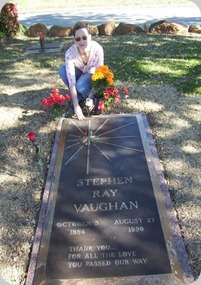
At around 1:00 a.m. on August 27, 1990, Vaughan was flying by helicopter from East Troy, Wisconsin to Chicago with members of Eric Clapton's tour crew. The helicopter crashed into the side of a 300-foot–high hill. Vaughan was killed, along with Nigel Browne and Colin Smythe. Earlier that evening, Vaughan had played with Double Trouble at Alpine Valley Music Theatre, featured as a special guest with Eric Clapton, Buddy Guy, Robert Cray and Jimmie Vaughan. Vaughan was interred at Laurel Land Memorial Park in Dallas, Texas. Martha and Jimmie Vaughan sued the helicopter company, Omniflight, based in Addison, Texas, for negligence in allowing the unqualified pilot, Jeff Brown, to fly and for allowing the flight in dense fog.
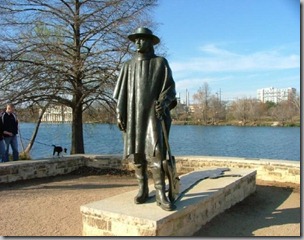
Statue of Stevie Ray Vaughan
Over the years that Stevie lived and performed, he touched so many hearts through his music and his guitar playing. He and his Signature Fender Stratocaster that he named “Number One” will go down in history in the Rock and Roll “Hall of Fame”. It is a shame that he had to die so young being as talented as he was.
I’ll look for another famous artist to share with you in my next post. It is great to learn more about the icons of the guitar world that we all strive to be part of.
Until next time ~
Musician By Night . . .